Rocks and minerals
In the Mendeleev table, we have 118 elements, of which our planet is more or less composed. Some are found in the lithosphere in large quantities, e.g. oxygen and silicon, some slightly less often than aluminium, iron, calcium, sodium, potassium, magnesium, and others in trace amounts. The part is obtained only in laboratory conditions.
 Loess rock Przemysław Czopor [CC BY 3.0], via Wikimedia Commons[/caption]
[caption id="" align="aligncenter" width="320"]
 Gypsum rock, By Verisimilus (Own work) [CC BY 3.0], via Wikimedia Commons[/caption]
[caption id="" align="aligncenter" width="320"]
 Hard coal, By Piotr Sosnowski (Own work) CC BY-SA 4.0, via Wikimedia Commons[/caption]
[rs-ads block="W środku"]
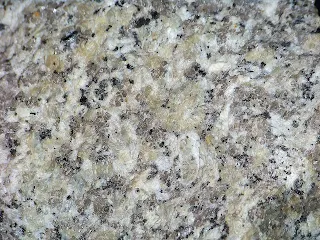 Granit from Strzelin, By Piotr Sosnowski (Own work) CC BY-SA 4.0, via Wikimedia Commons[/caption]
[caption id="" align="aligncenter" width="320"]
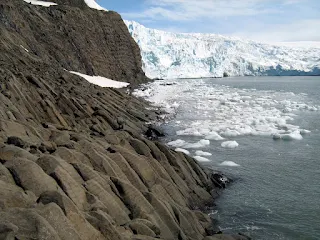 Basalt columns on Prince George Island, By Acaro (Own work) [CC BY-SA 3.0], via Wikimedia Commons[/caption]
[caption id="" align="aligncenter" width="320"]
 Porfir, By Piotr Sosnowski (Own work) CC BY-SA 4.0, via Wikimedia Commons[/caption]
[caption id="" align="aligncenter" width="320"]
 Obsidian, By No machine-readable author provided. PAR~commonswiki assumed (based on copyright claims). [Public domain], via Wikimedia Commons[/caption][rs-ads block="W środku"]
 Gneiss, By No machine-readable author provided. PAR~commonswiki assumed (based on copyright claims). , [Public domain], via Wikimedia Commons[/caption]
[caption id="attachment_685" align="aligncenter" width="300"]
 Marble, By Aleksander Kaasik (Own work) [CC BY-SA 4.0], via Wikimedia Commons[/caption]Depending on the conditions under which transformation occurs, we can distinguish:
Minerals
The mineral is an element or a simple chemical compound with specific chemical and physical properties that arose in nature through natural processes. In other words, it is the simplest, crystalline fragment of the lithosphere. There are primary and secondary minerals that transform from primary ones. Only 200 minerals out of 4,000 currently known form 99% of the lithosphere. We call them rock-forming minerals - these are, for example, feldspar, quartz, mica, dolomite and calcite. The remaining 3,700 occur in a fraction of the rocks, their exploitation is possible only because they form clusters fold. There are also simple compounds in the environment that we call mineral substances. They differ from minerals in that they have no crystal structure. Examples of these are ozokerite, amber, volcanic glaze, mercury, oil and natural gas.Rocks
Rock is a collection of minerals. They can be homogeneous or heterogeneous. We divide them into:- sedimentary rocks
- igneous rocks
- metamorphic rocks
Sedimentary rocks
Sedimentary rocks are formed on the Earth's surface in the processes of weathering, sedimentation and diagenesis, i.e. the transformation of loose rocks into dense. They are considered secondary rocks. They cover 75% of our planet, but with a thin layer that is only 5% in the lithosphere. We divide sedimentary rocks into:- crumb rocks - are the result of weathering and diagenesis, e.g. sands, clays, gravels, conglomerates, sandstones, loess.
- chemical rocks - for their formation, water solutions are needed, from which they precipitate or remain due to evaporation (evaporates), e.g. salt rocks, limestone, gypsum, dolomites, anhydrite.
- organogenesis rocks - originating from dead sedimentation biomass at the bottom of water reservoirs or depressions, e.g. reef and shell limestone, bog ores, brown and hard coal, chalk, phosphate rock, peat.
Loess rock Przemysław Czopor [CC BY 3.0], via Wikimedia Commons[/caption]
[caption id="" align="aligncenter" width="320"] Gypsum rock, By Verisimilus (Own work) [CC BY 3.0], via Wikimedia Commons[/caption]
[caption id="" align="aligncenter" width="320"] Hard coal, By Piotr Sosnowski (Own work) CC BY-SA 4.0, via Wikimedia Commons[/caption]
[rs-ads block="W środku"]
Igneous rocks
Igneous rocks arise from volcanic and plutonic activities. Volcanism are magma's motions, as well as its coagulation and crystallisation on the surface, and to some extent below the ground surface. Plutonism is the deep equivalent of volcanism. All igneous rocks are considered primitive. Depending on which process the rock is formed in, igneous rocks are divided into:- deep / plutonic rocks - they have a structure with overt crystals (crystals can be seen with the naked eye), because underground they have a lot of time to solidify, e.g. granite
- effusive / volcanic rocks - they have a structure with hidden crystals (they cannot be seen with the naked eye, but they do have crystals), because with eruptions and rapid displacements of lava and magma they do not have time for accurate crystallization, e.g. basalt.
- porphyry - i.e. single crystals embedded in rock dough. These are rocks that initially had the possibility of a slow crystallization, but before they were finished, they were thrown onto the surface, e.g. andesite.
- volcanic glass - this is an extreme case of volcanism. Rocks are ejected at such an express pace that no rock can crystallize, e.g. obsidian, pumice.
Granit from Strzelin, By Piotr Sosnowski (Own work) CC BY-SA 4.0, via Wikimedia Commons[/caption]
[caption id="" align="aligncenter" width="320"] Basalt columns on Prince George Island, By Acaro (Own work) [CC BY-SA 3.0], via Wikimedia Commons[/caption]
[caption id="" align="aligncenter" width="320"] Porfir, By Piotr Sosnowski (Own work) CC BY-SA 4.0, via Wikimedia Commons[/caption]
[caption id="" align="aligncenter" width="320"] Obsidian, By No machine-readable author provided. PAR~commonswiki assumed (based on copyright claims). [Public domain], via Wikimedia Commons[/caption][rs-ads block="W środku"]
Metamorphic rocks
Metamorphic rocks are sedimentary or igneous rocks chemically and physically changed under the influence of pressure and / or temperature. They are classified as secondary rocks. The most frequently occurring examples of metamorphic rocks are gneisses, transformed from granites (orthogneisses) or clay and sand sediments (parageneses), crystalline shales and limestone marbles. [caption id="" align="aligncenter" width="320"] Gneiss, By No machine-readable author provided. PAR~commonswiki assumed (based on copyright claims). , [Public domain], via Wikimedia Commons[/caption]
[caption id="attachment_685" align="aligncenter" width="300"] Marble, By Aleksander Kaasik (Own work) [CC BY-SA 4.0], via Wikimedia Commons[/caption]Depending on the conditions under which transformation occurs, we can distinguish:
- contact metamorphism - the main factor is the temperature near the magma clusters
- dislocation metamorphism - the main factor is pressure, rocks are displaced by rock-forming movements to small depths
- regional metamorphism - factors are both temperature and pressure, rocks are moved to great depths

Komentarze
Prześlij komentarz